A towing dispatch handoff model built for stability, training, and control.
TowKraft audits process, trains into the workflow, and only then moves into live after-hours, overflow, weekend, or approval-heavy dispatch support so owners can test fit before paying for broader coverage.
Audit, training, go-live, and ongoing support.
The operating model is designed to show how TowKraft plugs into a towing operation without creating new handoff problems.
Operational Audit
TowKraft reviews your dispatch flow, call types, escalation patterns, and where after-hours or overflow support is actually breaking down.
Training And Transition
Coverage rules, handoff standards, and workflow-specific training are defined before live support begins.
Live Shift Support
TowKraft then plugs into after-hours, overflow, weekend, or approval-heavy dispatch work with reporting visibility and clearer handoffs.
A structured operating model reduces rollout risk, avoids messy handoffs, keeps owners from paying for broader support before fit is clear, and creates a cleaner path to cost-efficient coverage.
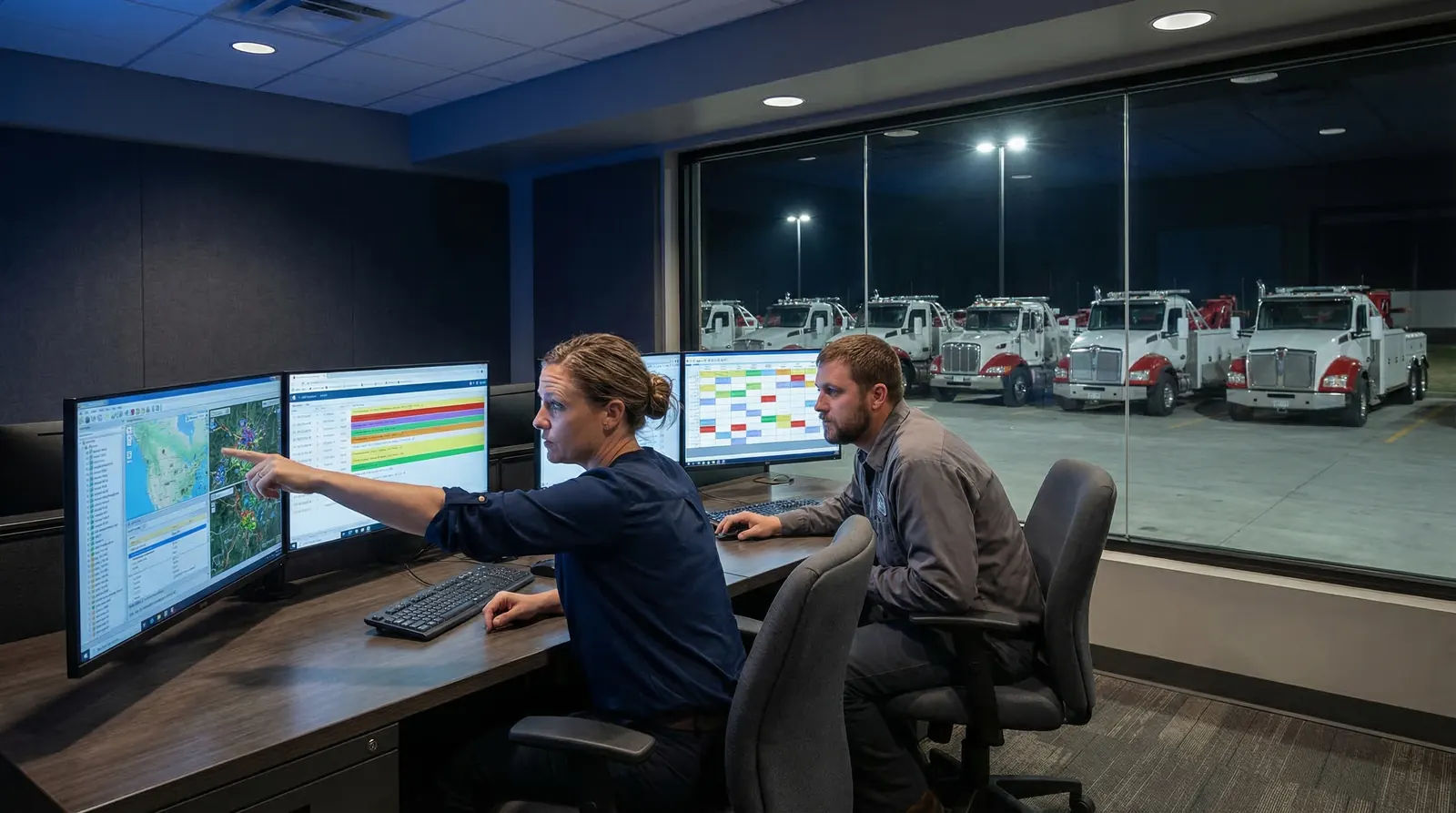
TowKraft plugs into operations without forcing owners into generic coverage or broader payroll expansion.
The operating model is built around structured onboarding, workflow training, live coverage standards, and clearer handoffs so owners can test a leaner coverage model before committing to broader support.